Haldenorialia
Free Kit
Free Kit
Couldn't load pickup availability
Self-paced learning overview
- 📩 Digital file available after purchase
- 📚 Long-term availability
- 🔒 Secure checkout
- 🗓️ Content updated in 2026
Level: Beginner
1. Problem Statement
Game development brings together creative decisions, technical logic, interaction rules, and the organization of digital elements. People exploring this field for the first time often encounter unfamiliar concepts without a clear understanding of how they relate to one another. Game mechanics, character controls, event systems, and environmental logic may appear to be separate components, even though they operate together. Without a structured introduction, understanding how an initial idea develops into a collection of interconnected rules and processes can be challenging. Learning about the fundamental structure of games provides a useful starting point for further study.
2. Solution
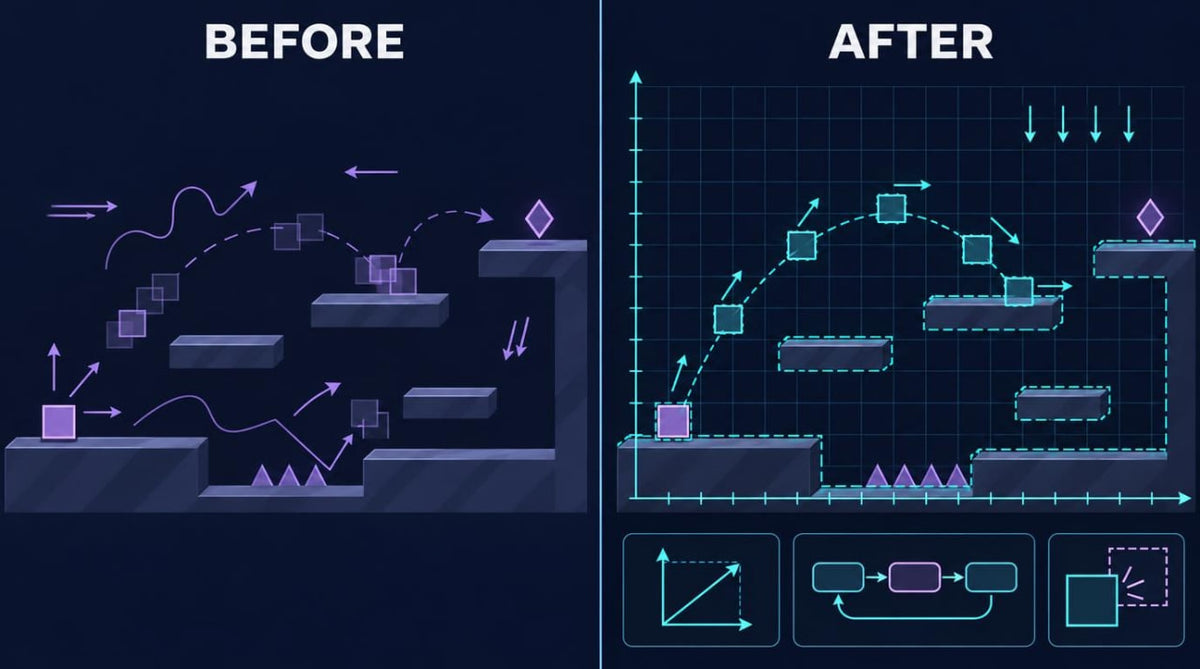
Free Kit offers a structured introduction to the fundamental concepts behind digital game creation. The educational materials are divided into focused modules, each examining a specific part of a game system. Explanations include examples demonstrating the relationships between rules, player actions, and the behavior of game environments. Practical activities encourage learners to analyze simple gameplay scenarios and describe the logic behind their operation. This approach helps readers gradually become familiar with game development terminology, design principles, and the structure of interactive mechanics.
3. What's Inside
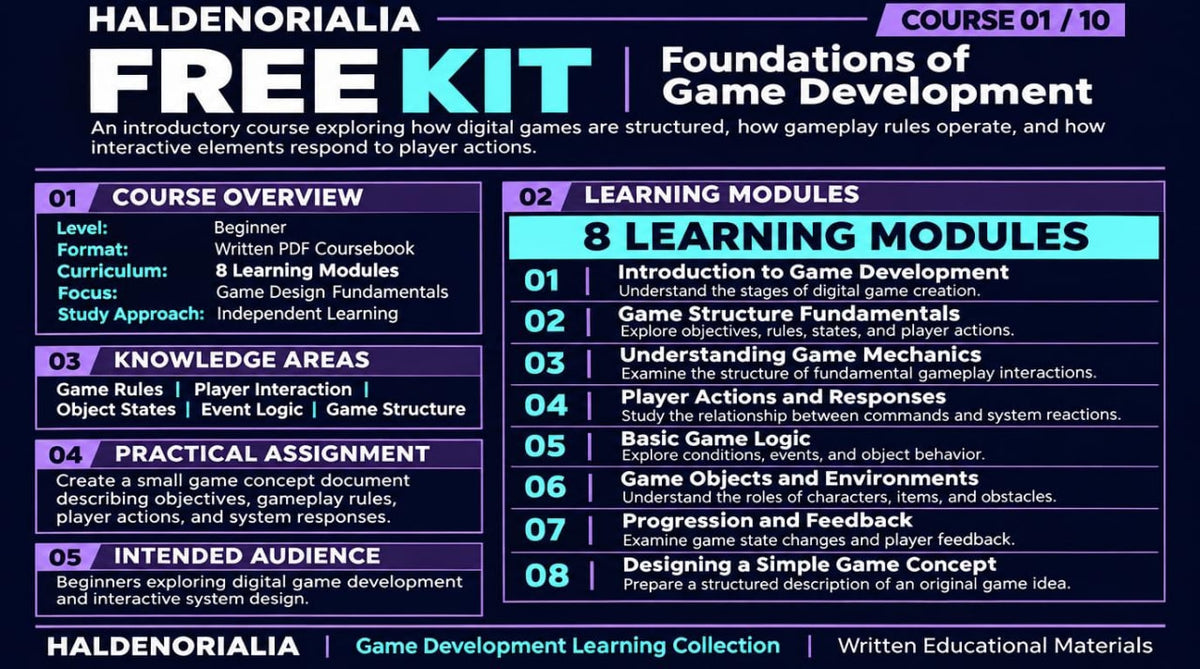
Module 1: Introduction to Game Development
Explore the main stages of digital game creation and the relationship between creative planning and technical processes.
Module 2: Game Structure Fundamentals
Examine fundamental game components, including rules, objectives, states, and player actions.
Module 3: Understanding Game Mechanics
Study the principles behind simple game mechanics and how different mechanics interact.
Module 4: Player Actions and Responses
Explore how game systems receive commands and respond to player interactions.
Module 5: Basic Game Logic
Learn about conditions, event sequences, and fundamental object behavior rules.
Module 6: Game Objects and Environments
Examine the roles of characters, items, obstacles, and spatial elements within a game environment.
Module 7: Progression and Feedback
Explore methods of communicating game state changes, completed actions, and environmental responses.
Module 8: Designing a Simple Game Concept
Prepare a structured description of a small game, including its rules, player actions, and logical relationships.
4. Who Is This For?
✅ Suitable if you:
- Are beginning to explore digital game development.
- Want to understand how fundamental game mechanics are organized.
- Are interested in the relationship between creative decisions and technical game systems.
- Prefer exploring game structures through written educational materials.
- Are looking for an introductory course with practical examples.
- Plan to gradually study more complex game development concepts.
❌ Not for you if you:
- Are looking for advanced materials on large-scale game system architecture.
- Already have extensive knowledge of foundational concepts and want to focus entirely on complex architectural topics.
- Expect to create a complete commercial game within a single introductory course.
- Prefer individual instructor-led sessions rather than independent study with written materials.
5. What You'll Learn
While studying Free Kit, you will explore the following subjects and practical skills:
- Game design fundamentals: Identifying objectives, rules, and the basic components of a game concept.
- Game system structure: Understanding relationships between objects, states, and mechanics.
- Interaction logic: Describing how game environments respond to player actions.
- Events and conditions: Organizing simple sequences of gameplay events.
- Game environment organization: Identifying the roles of characters, items, and obstacles.
- Progression mechanics: Examining methods of tracking changes during gameplay.
- Idea organization: Preparing a short design document describing an original game concept.
- Example analysis: Identifying primary rules and relationships within small gameplay scenarios.
6. Refund Policy
14-Day Refund Request Period
Free Kit is a free course, so refunds do not apply to this course. For paid Haldenorialia courses, conditions for submitting refund requests within 14 days of purchase should be defined in the store's published refund policy and applicable law.
1. What format are the learning materials provided in?
1. What format are the learning materials provided in?
Haldenorialia courses are presented as written PDF coursebooks containing themed modules, explanations of technical concepts, examples, and practical exercises. The materials are organized for independent study, allowing learners to revisit individual topics and work through them at their own pace.
2. Do I need previous game development knowledge?
2. Do I need previous game development knowledge?
This depends on the course you choose. Introductory materials explain foundational game development concepts, while later courses explore more complex technical and design topics. We recommend reviewing the module descriptions and course subjects before making your selection.
Share