Haldenorialia
Lattice Framework
Lattice Framework
Couldn't load pickup availability
Self-paced learning overview
- 📩 Digital file available after purchase
- 📚 Long-term availability
- 🔒 Secure checkout
- 🗓️ Content updated in 2026
Level: Intermediate to Advanced
1. Problem Statement
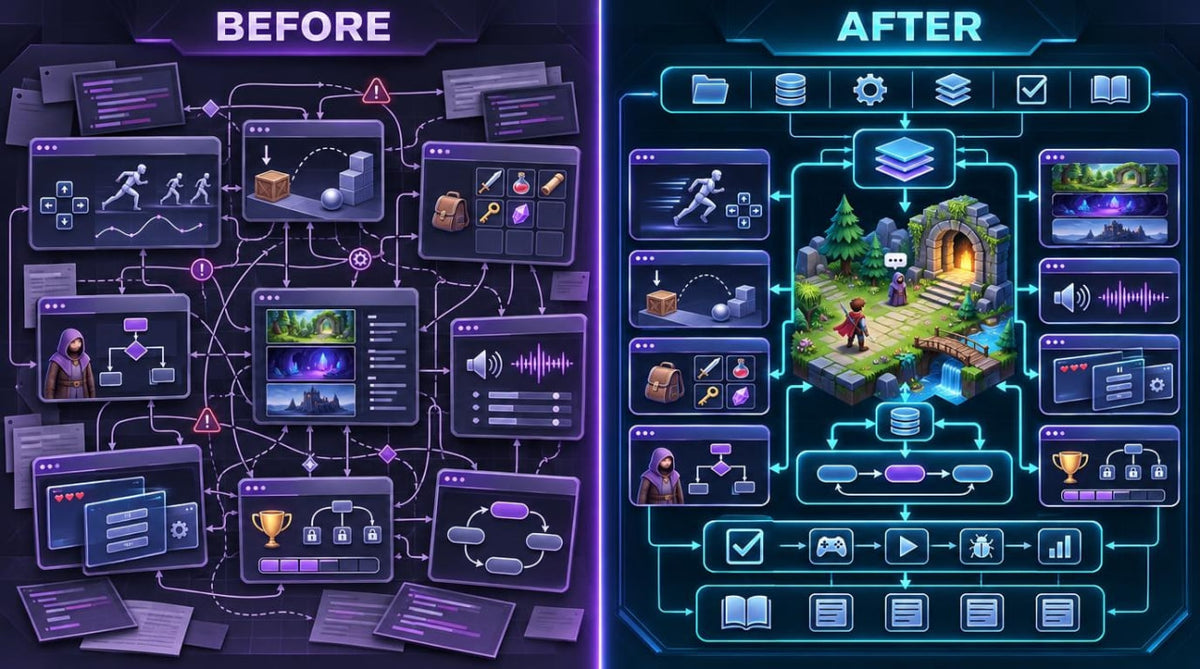
As a game project develops, the number of mechanics, objects, and logical relationships gradually increases. Individual movement, inventory, interaction, character, and progression systems need to operate together while maintaining an understandable structure. Without thoughtful component organization, changes in one part of a game may affect other mechanics and create unpredictable situations. Additional challenges arise when managing shared data, saving game states, and evaluating interactions between multiple systems. Working with these projects requires an understanding of architectural principles, component organization methods, and approaches to reviewing system logic.
2. Solution
Lattice Framework provides a structured exploration of the principles behind organized game system architecture. Its educational modules explain methods of distributing responsibilities between components, organizing data, and establishing interaction rules. Technical examples demonstrate modular structures, event systems, state management, and methods of preserving gameplay information. Practical exercises involve designing architecture diagrams, analyzing dependencies, and preparing documentation for individual game subsystems. The materials support the exploration of methods for organizing interconnected mechanics within a coherent game project.
3. What's Inside
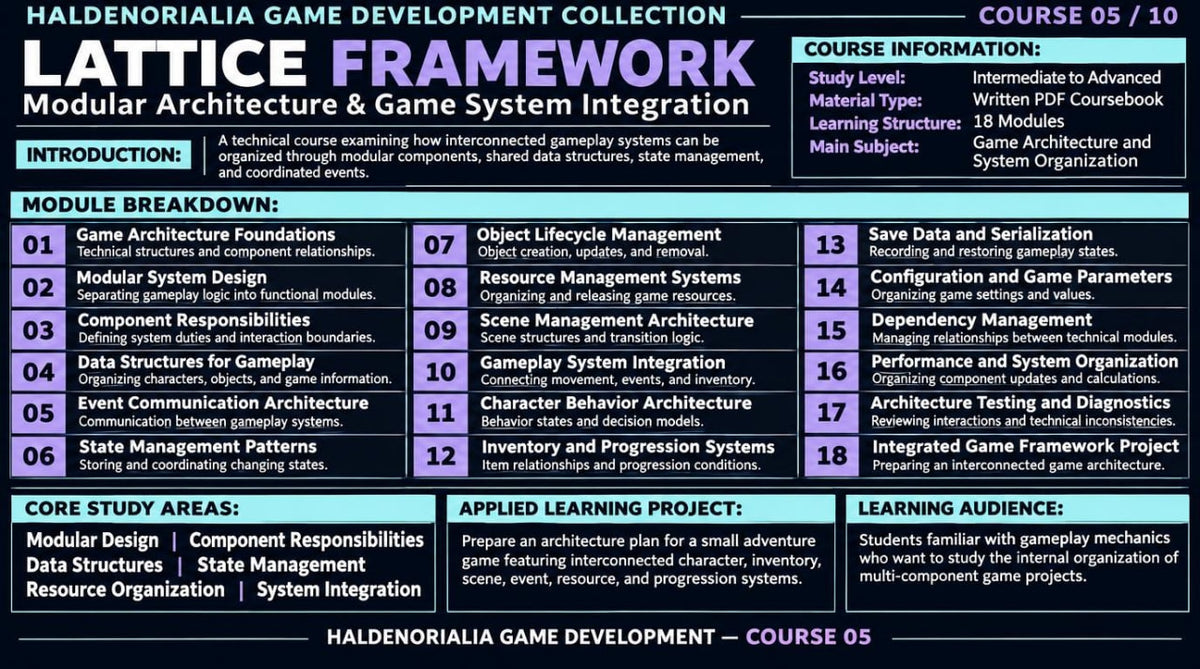
Module 1: Game Architecture Foundations
Explore principles for organizing the technical structure of a game project and relationships between its components.
Module 2: Modular System Design
Examine methods of separating game logic into independent modules with defined responsibilities.
Module 3: Component Responsibilities
Study methods of assigning responsibilities to individual components and defining interaction boundaries.
Module 4: Data Structures for Gameplay
Learn how to organize information about characters, items, parameters, and game environment states.
Module 5: Event Communication Architecture
Explore principles of communicating messages between game systems and processing related events.
Module 6: State Management Patterns
Examine methods of storing, updating, and coordinating states across different game components.
Module 7: Object Lifecycle Management
Study the creation, activation, updating, and removal of game objects throughout their lifecycle.
Module 8: Resource Management Systems
Explore methods of organizing resource loading, utilization, and release within a game project.
Module 9: Scene Management Architecture
Examine approaches to organizing individual scenes, their dependencies, and transitions between game environments.
Module 10: Gameplay System Integration
Analyze interactions between movement, inventory, objectives, events, and character management systems.
Module 11: Character Behavior Architecture
Study models for organizing behavioral states, decision rules, and non-player character responses.
Module 12: Inventory and Progression Systems
Explore relationships between game items, objectives, resources, and progression conditions.
Module 13: Save Data and Serialization
Learn methods of representing game states for storage and subsequent restoration.
Module 14: Configuration and Game Parameters
Examine the organization of mechanic settings, object characteristics, and game system parameters.
Module 15: Dependency Management
Study methods of defining component relationships and reducing unnecessary dependencies.
Module 16: Performance and System Organization
Explore approaches to organizing calculations, component updates, and resource utilization.
Module 17: Architecture Testing and Diagnostics
Learn methods of reviewing component interactions, analyzing events, and documenting technical issues.
Module 18: Integrated Game Framework Project
Prepare the technical architecture of a small game with modules for managing states, events, resources, and gameplay progression.
4. Who Is This For?
✅ Suitable if you:
- Already understand foundational game development concepts.
- Are familiar with gameplay mechanics and event systems.
- Want to explore interactive project architecture.
- Are interested in modular game logic organization.
- Want to study methods of managing gameplay data.
- Plan to work with more complex relationships between components.
- Want to prepare technical documentation for game systems.
- Prefer independent study using written educational materials.
❌ Not for you if you:
- Are beginning your introduction to digital game development.
- Are unfamiliar with basic game state and event concepts.
- Are looking exclusively for game artwork instruction.
- Want to study only character animation or game model creation.
- Expect a fully completed game without independent practical work.
- Require individual instructor-led sessions.
- Are looking exclusively for introductory gameplay mechanics materials.
5. What You'll Learn
- Game system architecture.
- Modular component organization.
- Gameplay data structures.
- State and event management.
- Resource and scene organization.
- Gameplay mechanic integration.
- Game data storage.
- Dependency management.
- Component behavior analysis.
- Game architecture testing.
6. Refund Policy
14-Day Refund Request Period
Refund requests for Lattice Framework are reviewed according to the published Haldenorialia store policy and applicable law.
1. What format are the learning materials provided in?
1. What format are the learning materials provided in?
Haldenorialia courses are presented as written PDF coursebooks containing themed modules, explanations of technical concepts, examples, and practical exercises. The materials are organized for independent study, allowing learners to revisit individual topics and work through them at their own pace.
2. Do I need previous game development knowledge?
2. Do I need previous game development knowledge?
This depends on the course you choose. Introductory materials explain foundational game development concepts, while later courses explore more complex technical and design topics. We recommend reviewing the module descriptions and course subjects before making your selection.
Share